Wearing outfits that feel like you doesn’t mean following every microtrend making the rounds on social media. The real challenge of everyday women’s fashion is building a cohesive wardrobe, where pieces work together effortlessly and last through the seasons. A few thoughtful choices are all it takes to create a lasting personal style.
Build a personal wardrobe instead of chasing every fashion trend
Have you ever noticed how some women wear simple outfits and always look well dressed? Their secret is no mystery: they have a core collection of pieces they know inside out and adapt to different occasions.
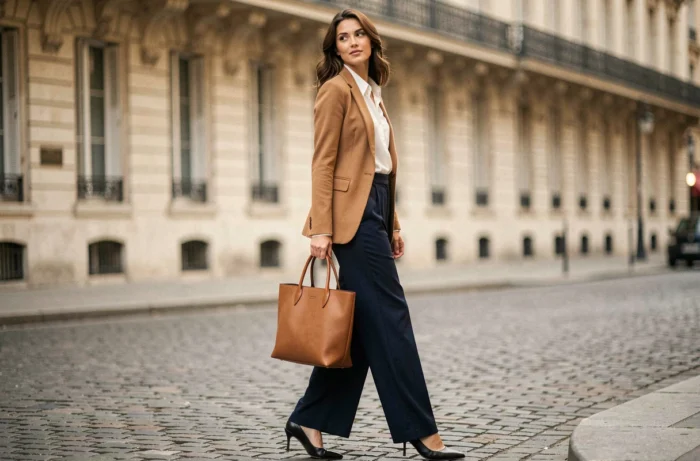
This core collection, sometimes called a capsule wardrobe, is built around about ten versatile garments that work well together. Straight-leg trousers in a substantial fabric, dark-wash jeans, two or three tops in complementary colors, a structured jacket and a versatile dress already make a solid foundation.
The idea isn’t to give up on trends, but to be selective. When you like a seasonal color or cut, first check whether it works with the pieces you already own. If you need to buy three extra items to make one piece work, that trend isn’t for you. For practical inspiration on how to make these choices, explore the fashion section of Mademoiselle Camille, which regularly looks at how to develop a style that works for everyday life.
A garment that goes with nothing in your closet is a garment you don’t need, no matter how much it costs or whether it appeared on the runway.
Colors and fabrics: practical pointers for choosing seasonal pieces
Fall-winter and spring-summer trends come and go, but some color principles remain the same. Instead of memorizing the palettes dictated by fashion weeks, learn to identify the shades that work with your complexion and lifestyle.
Find your personal color palette
Here’s a quick test: hold a piece of white fabric near your face, then try a cream one. If white makes you look tired, warm tones (camel, terracotta, khaki) will suit you better than cool tones. The reverse is true, too.
This simple approach helps you avoid buying a sweater in the season’s must-have color, wearing it twice and then relegating it to the back of your closet. Choosing colors that suit you means fewer unnecessary purchases.
Fabrics that last through several seasons
Merino wool, heavyweight cotton, linen and good-quality viscose hold their shape wash after wash. Cheap synthetic blends pill quickly and lose their shape.
- Merino wool works in everything from fine-gauge sweaters to chunky knits, from the office to the weekend and from fall through early spring.
- Cotton twill, used for chinos and some jackets, holds its shape far longer than low-quality jersey cotton.
- Linen wrinkles naturally, but that’s part of its appeal in summer, giving it a relaxed drape without any effort to keep it smooth.
Investing in a durable fabric often costs less over two years than buying the same piece three times in a cheaper version.
Secondhand and repairs: an overlooked way to develop your style
The secondhand market in France grows every year. According to Refashion, the volume of secondhand clothing sold by brands and retailers increased faster in 2025 than sales between individuals. Thrift stores, consignment shops and brick-and-mortar boutiques remain major places to find distinctive pieces.
Why choose secondhand? Because a vintage jacket in good condition adds a unique touch that no current collection can replicate. Secondhand shopping makes it possible to find one-of-a-kind pieces at lower prices, while avoiding the uniformity of mass-market collections.
When it comes to care, the textile and footwear repair bonus—reviewed by the Ministry for Ecological Transition in October 2026 during the National Repair Days—makes it more affordable to have a lining resewn, a zipper replaced or boots resoled. Repairing a garment you love often costs less than replacing it.
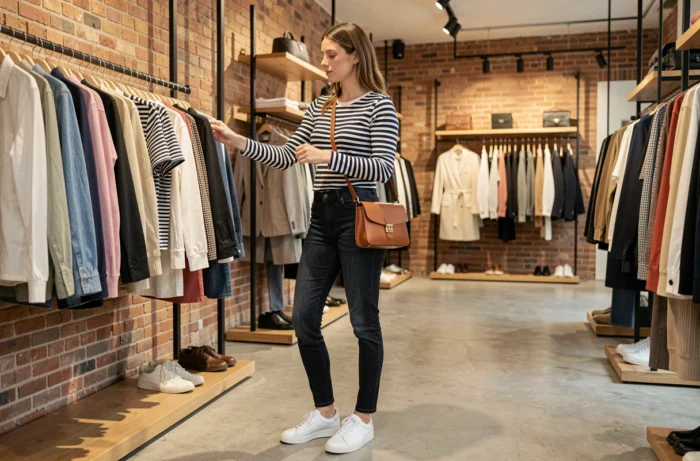
Everyday outfits: put pieces together without spending an hour
The point of a well-planned wardrobe is to get dressed quickly in the morning. Three styling principles make the process easier.
First: never combine more than three colors in one outfit. Two neutrals (black, navy, gray, beige) and one accent color (red, forest green, royal blue) are enough to create a polished look.
Second: play with proportions. Pair a fitted top with a loose bottom, or vice versa. Try an oversized jacket with slim-fit trousers. This contrast in volume adds movement to your silhouette without the need for extra accessories.
Third: choose your shoes to suit the length of your trousers, not the other way around. Trousers that fall neatly over your shoes can transform the whole outfit.
- Classic straight-leg trousers: wear with a mid-heel ankle boot or loafers, leaving the ankle visible or letting the fabric skim the top of the shoe.
- Wide-leg jeans or palazzo trousers: pair with white sneakers or flat sandals; the hem can graze the floor without getting in the way as you walk.
- Cigarette trousers: wear with pumps or ballet flats; a bare ankle elongates the silhouette.
These combinations don’t require any extra spending. They’re all about looking at what you already own and trying on a few outfits in front of a full-length mirror.
Women’s fashion becomes more rewarding when it’s a way to express yourself rather than a race to keep up with what’s new. A smaller, well-curated closet, fabrics chosen for their durability and a few secondhand pieces that add character: everyday style is built as much by taking things away as by adding them.